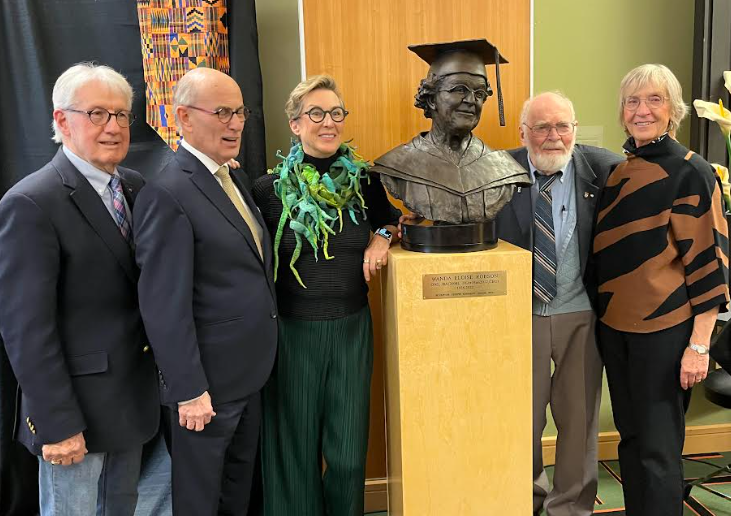
The late civil rights activist helped raise awareness of the contributions of her sister, Viola Desmond, to Canadian civil rights.

Chippie Kennedy, NSS was on hand for the unveiling of her latest work. Her commissioned bust is of Wanda Robson, the late famed civil rights activist. The bust depicts Mrs. Robson as a student during her time at Cape Breton University (Sydney, Nova Scotia). Shown here is Joe Robson, Wanda’s husband, with Chippie, during the unveiling ceremony at CBU on November 22, 2024.

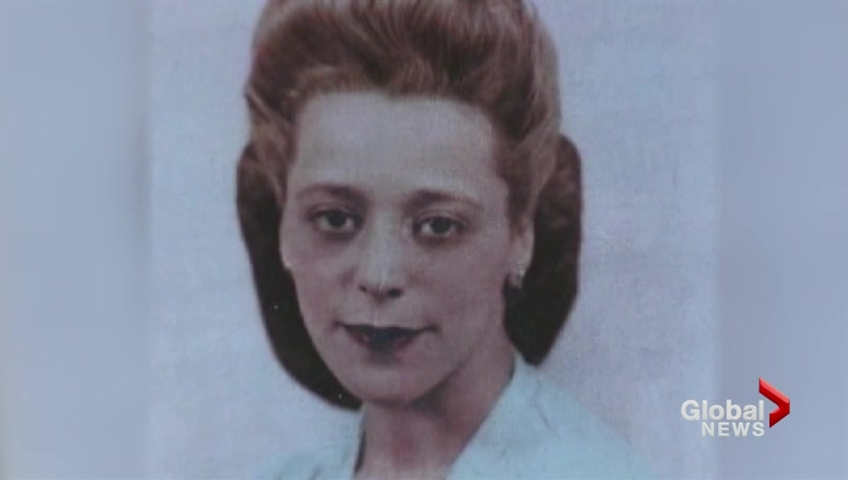
Wanda Robson (née Davis; December 16, 1926 – February 6, 2022) was a Canadian civil rights activist, educator, author, and community leader from Nova Scotia. She is best known as the youngest sister of Viola Desmond, the pioneering Black Canadian businesswoman and civil rights icon who challenged racial segregation in 1946 by refusing to leave the whites-only section of a movie theatre in New Glasgow, Nova Scotia—an act often compared to Rosa Parks’ in the United States.

Robson played a pivotal role in preserving and promoting her sister’s story. In her later years, after auditing a university course on race relations, she became a passionate advocate, speaking at schools and events across Canada. Her efforts led to Viola Desmond receiving a posthumous free pardon from the Nova Scotia government in 2010 (the first of its kind in Canada) and being honored on the Canadian $10 bill in 2018.
At age 76 (or 77 in some accounts), Robson fulfilled a lifelong dream by earning a Bachelor of Arts degree from Cape Breton University in Sydney, Nova Scotia, in 2004. She later received an honorary Doctor of Letters from the same institution. The university connection is why the recent bust by sculptor Chippie Kennedy depicts her as a student during that time.

Robson authored books, including Sister to Courage (2010), recounting her life and family stories. She served on the Nova Scotia Advisory Council on the Status of Women and was involved in Girl Guides of Canada. In 2021, she was awarded the Order of Nova Scotia.

The brass bust mentioned, created by sculptor Chippie Kennedy, was unveiled at Cape Breton University in late 2024. It portrays Robson as a student and honors her contributions to education and social justice.
Robson’s work helped advance recognition of Black Nova Scotian history and racial equality in Canada. She passed away at age 95 in North Sydney, Nova Scotia, leaving a lasting legacy tied to both her own activism and her sister’s groundbreaking stand against segregation.

Shown here is Joe Robson, Wanda’s husband, during the unveiling ceremony at CBU on November 22, 2024.
The Incident and Arrest of Viola Desmond
On November 8, 1946, Viola Desmond, a 32-year-old Black Nova Scotian businesswoman from Halifax, experienced a car breakdown while on a sales trip to Sydney, Nova Scotia. Stranded overnight in New Glasgow, she decided to watch the film The Dark Mirror at the Roseland Theatre to pass the time.
The theatre enforced an unofficial racial segregation policy: the main floor was reserved for white patrons, while Black patrons were restricted to the balcony. Desmond, who was nearsighted and needed to sit closer to the screen, purchased a main-floor ticket (40 cents, including 3 cents amusement tax). The cashier refused to sell her one, issuing a balcony ticket (30 cents, including 2 cents tax) instead, but Desmond proceeded to sit on the main floor anyway.
When asked to move, she refused, stating she had tried to buy a floor ticket and offered to pay the difference. The manager called the police, who forcibly dragged her from her seat (injuring her hip in the process), arrested her, and held her in jail overnight without informing her of her rights to bail, counsel, or legal advice.


The Trial (November 9, 1946)
The next morning, Desmond appeared before Magistrate Roderick MacKay in a summary trial without legal representation or a Crown prosecutor present. Race was never mentioned in the proceedings—the theatre’s segregation was a “custom,” not a law.
She was charged not with violating segregation but with defrauding the Province of Nova Scotia of one cent in amusement tax: the difference between the 3-cent tax on a main-floor ticket and the 2-cent tax on the balcony ticket she was sold.
Desmond was found guilty, fined $20 plus $6 in court costs (with the $6 awarded directly to the theatre manager, Henry MacNeil, listed as the prosecutor). She paid the fine and was released.
The Appeal (1947)
Supported by the Nova Scotia Association for the Advancement of Coloured People (NSAACP) and coverage in the Black-owned newspaper The Clarion, Desmond hired Halifax lawyer Frederick William Bissett to appeal.
The case reached the Supreme Court of Nova Scotia via a writ of certiorari. Bissett argued procedural errors and indirectly challenged the segregation, but avoided a direct constitutional attack on racial discrimination due to legal uncertainties.
The court upheld the conviction on technical grounds, ruling the tax statute applied regardless of the underlying motive. One judge noted privately that the charge seemed a pretext to enforce a “Jim Crow rule,” but the appeal failed.
Desmond also pursued (but later abandoned) civil suits against the theatre for assault and false imprisonment.
Legacy and Later Recognition
Though unsuccessful in court, Desmond’s act sparked broader discussions on racial segregation in Nova Scotia, contributing to its eventual end in the 1950s. She later moved to Montreal and New York, where she died in 1965 at age 50.
In 2010, Nova Scotia granted her a posthumous free pardon—the first in Canada—acknowledging the conviction as a miscarriage of justice. In 2018, she became the first Canadian woman featured alone on a regular banknote (the vertical $10 bill).




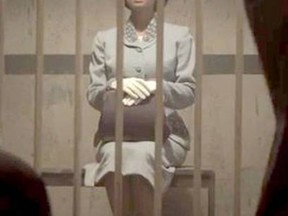
Desmond’s defiance, nine years before Rosa Parks’ similar act, is now celebrated as a pivotal moment in Canada’s civil rights history.